 DriveInOntario.ca
Parallel parking trips up more road-test candidates than almost any other single maneuver — not because it's mechanically hard, but because it's the one skill most people never practice outside of test prep.
Before you start
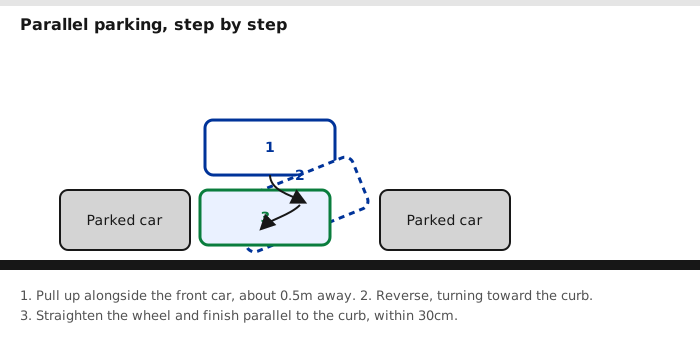
Look for a space about one and a half times the length of your car — long enough to maneuver into comfortably, but realistic for the tight spaces you'll actually find on a test route. Signal, check your mirrors and shoulder check, then pull up alongside the car in front of the space, leaving about half a metre between your vehicles.
The three steps
- Line up. Stop when your rear bumper is roughly even with the other car's rear bumper.
- Reverse and turn. Shift into reverse, check your mirrors and blind spot, and turn the wheel sharply toward the curb as you back up slowly.
- Straighten out. Once your car is angled into the space, straighten the wheel and continue reversing until you're parallel with the curb, then adjust forward or back to centre yourself in the space.
Ready for the real thing?
Ready to see how this looks on the real test format?
What examiners are looking for
You need to end up within 30 centimetres of the curb, without hitting either car or mounting the curb. Examiners are also watching your mirror and shoulder checks throughout the maneuver — going through the motions of checking without actually looking is an easy way to lose points even if the parking itself is clean.
Common mistakes
Turning the wheel too early or too late is the most common issue, and it usually comes from not having a consistent reference point — many drivers use the moment their front seat aligns with the target car's back bumper as the cue to start turning. Rushing the maneuver is another frequent problem: there's no time pressure built into the test for this specific skill, so slow, controlled movements with pauses to check your position are far safer than a fast, single attempt.