 DriveInOntario.ca
A three-point turn (also called a three-point turnabout) is how you change direction on a road that's too narrow to make a U-turn in one motion. It's a core maneuver on Ontario road tests, and the sequence matters as much as the steering.
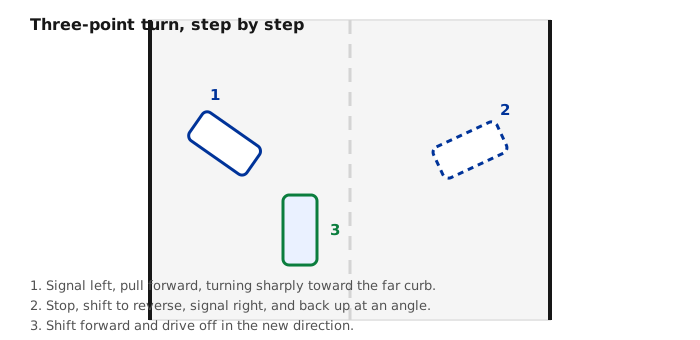
The three steps
- Signal and pull forward. From the far right side of the road, signal a left turn. When the way is clear in both directions, move forward, steering sharply left toward the curb on the far side of the road.
- Stop and reverse. When you reach the left side of the road, stop, shift into reverse, and signal a right turn. Check your mirrors and look over your shoulder before backing up, steering right as you go.
- Complete the turn. Stop again, shift into drive, and pull forward in your new direction, straightening the wheel as you go.
Where you can't do this
The MTO handbook is specific about this: don't attempt a three-point turn on a curve in the road, on or near a railway crossing, near the top of a hill, or close to a bridge or tunnel that blocks other drivers' view of you. Any of these locations means other traffic may not see you in time to react, which is exactly what examiners are checking for when they choose where on the route to ask for this maneuver.
실제 시험을 볼 준비가 되셨나요?
실제 시험 형식에서는 어떻게 나오는지 확인해 볼까요?
What examiners are looking for
Beyond the mechanics, examiners want to see full mirror and shoulder checks before every direction change (three separate checks across the three steps, not one at the start), smooth and controlled steering rather than jerky corrections, and — most importantly — that you actually yield to any traffic, cyclists, or pedestrians before starting each part of the turn. A three-point turn only works if the road is genuinely clear; forcing it through moving traffic is treated as a serious fault.