 DriveInOntario.ca
Highway merging is the single biggest difference between the G2 and full G road tests, and it's the maneuver most new drivers are least practiced at — you simply can't rehearse it on quiet residential streets.
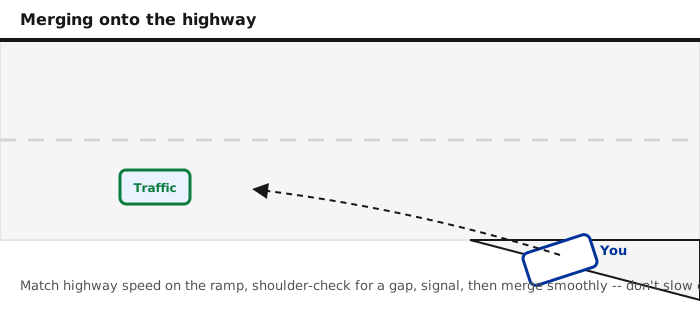
On the ramp
Use the acceleration lane to bring your car up to the same speed as highway traffic before you merge — not after. Merging too slowly forces highway traffic to brake or swerve around you, which is treated as a fault even though it might feel like the "safe" choice.
The mirror-shoulder-signal sequence
This is the same four-step check used for any lane change, just at higher speed and with less margin for error:
- Mirror check — look for a gap in traffic where you can merge safely.
- Shoulder check — turn your head to check your blind spot; mirrors alone don't cover it.
- Signal — sooner than you would on a city street, since highway traffic closes distance faster.
- Merge smoothly — steer gradually into the lane, holding or gently increasing your speed. Turn off your signal once you're merged.
¿Listo para el examen real?
¿Listo para ver cómo se ve esto en el formato real del examen?
Once you're on the highway
Maintain the posted speed and a following distance of at least 3 seconds to the car ahead — more in poor weather. Every lane change on the highway repeats the full mirror-shoulder-signal sequence; because traffic is moving faster, examiners are especially strict about seeing a real head turn for the shoulder check, not just a glance at the mirror.
Exiting
Signal early and move into the deceleration lane before you slow down, not after — braking while still in a highway travel lane is one of the more serious highway-test faults, since it puts the driver behind you at risk.